When did we decide that every electric vehicle needed to be capable of travelling hundreds of miles between charges? It makes sense for someone who spends their life on the motorway, but for the plumber who works within a few miles of home or a courier whose van returns to the same depot every evening, it may simply mean paying for a battery they rarely use.
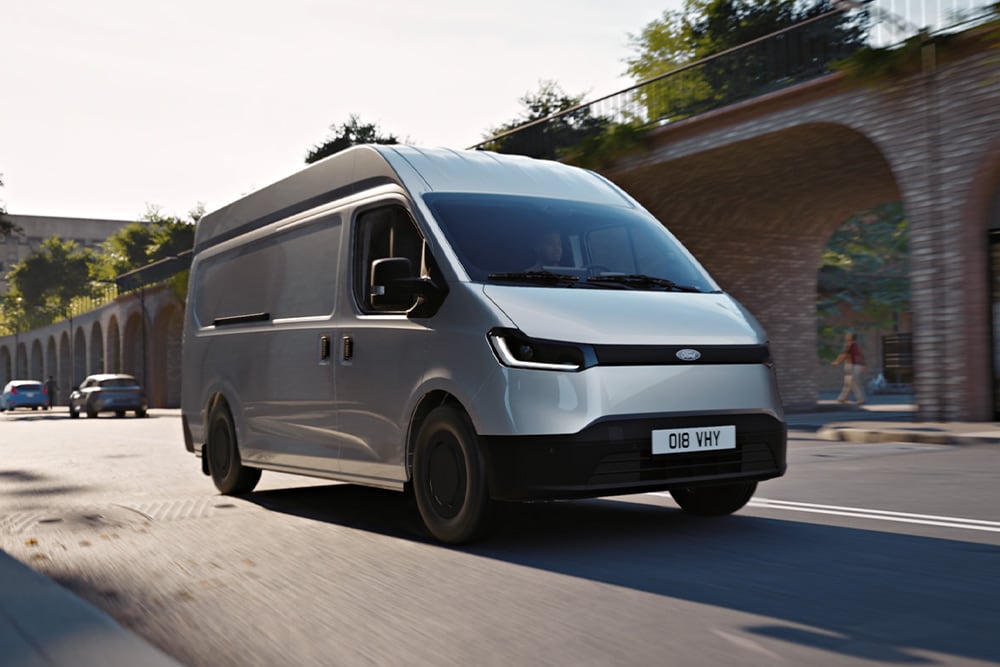
Ford's new Transit City is interesting precisely because it starts with that problem. The latest addition to the Transit family is in production, with customer vehicles expected to enter service in early 2027, following its European media launch in Málaga this November.
Why Ford has opted for a smaller battery
Ford examined data from thousands of electric vans and found that 90% covered less than 110km (around 68 miles) during an average working day. That is a useful reminder that van buying should start with the job, not the biggest number in the brochure.
The Transit City uses a 56kWh lithium iron phosphate battery. Ford quotes up to 158 miles on the combined WLTP test, with a higher figure of roughly 236 miles on the separate city cycle. Those are laboratory figures, and a loaded van in January will not necessarily achieve them. The idea is to keep the vehicle affordable without making it impractical for the businesses it is designed to serve.
Three ways to put a Transit City to work
There are two panel vans, the shorter L1H1 and the larger L2H2, plus a chassis cab intended for specialist bodies. The bigger panel van has up to 8.5 cubic metres of load space. Ford also offers ready-to-work conversions including a box van and a dropside, which should make life easier for businesses that otherwise have to organise a conversion separately.
I particularly like the decision to offer a single equipment specification. Anyone who has tried comparing commercial vehicle quotations will appreciate how quickly the process becomes complicated when every useful item seems to be an option. A heated driver's seat and parking assistance are sensible inclusions for someone spending their working day in and out of a van.
Will it make financial sense?
The purchase price is only half the conversation. A business needs to consider the cost of financing the vehicle, charging infrastructure, insurance, downtime and the electricity tariff. A van charging at a depot overnight could have a very different cost per mile from one relying on public rapid chargers.
From my perspective working in the automotive sector, that is where this Ford could prove particularly useful. A fleet manager can look at actual journey data, choose suitable routes and start electrifying the vehicles that are easiest to switch. There is no need to replace every diesel van in one go.
Ford's established commercial vehicle network is another part of the proposition. A cheap van is little consolation if it is sitting in a workshop when it ought to be out earning money. Service arrangements and parts availability deserve as much scrutiny as the monthly payment.
When is the Ford Transit City coming to the UK?
Ford expects the first vehicles to be working from early 2027. UK customers can explore the Transit City range on Ford's website. Confirm current pricing, grant eligibility and delivery dates with a supplier before ordering.
I'm pleased to see a manufacturer tackling the cost of electrifying a working van without immediately reaching for a huge battery. Whether it becomes a popular sight on British streets will depend on how competitive the complete ownership package turns out to be.
Source: Ford Pro European media launch, November 2026. Image: Ford UK.