There's some welcome news from Britain's car factories this morning. Car production rose for the third consecutive month in October, and after what the industry has been through, I'm certainly not going to complain about seeing a positive number. But before we start talking about a British automotive revival, it is worth looking at what sits behind it.
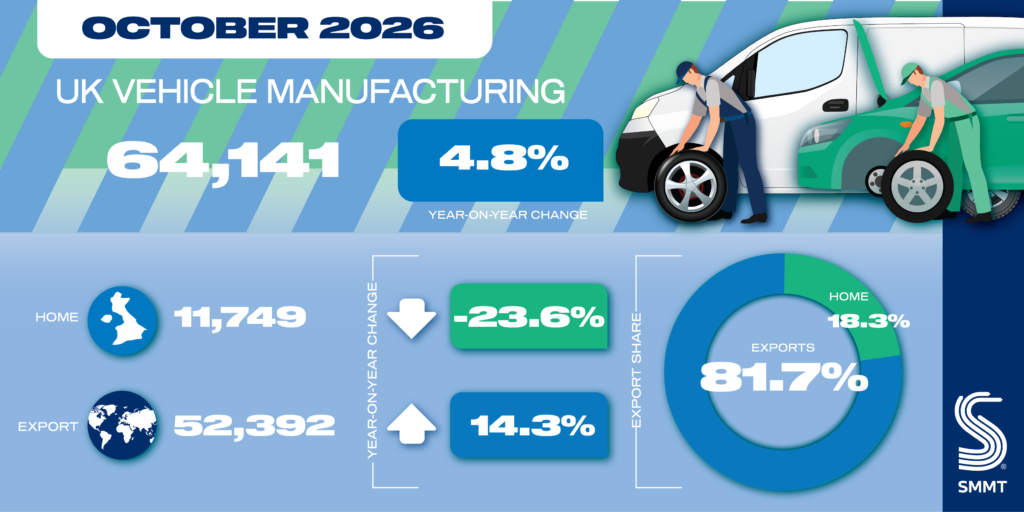
According to figures published by the SMMT on 27 November, UK factories made 61,746 cars in October 2026, 6.2% more than a year earlier. Including commercial vehicles, total output reached 64,141, an increase of 4.8%. The comparison, however, is with a month in which a major cyber incident severely disrupted production.
What the October numbers actually tell us
Comparing a recovering factory with one that was struggling to operate a year earlier tells us that production has improved. It is less helpful in determining whether the underlying industry is healthy. Across January to October, car output rose by just 0.7%, while total vehicle manufacturing fell by 2.3%.
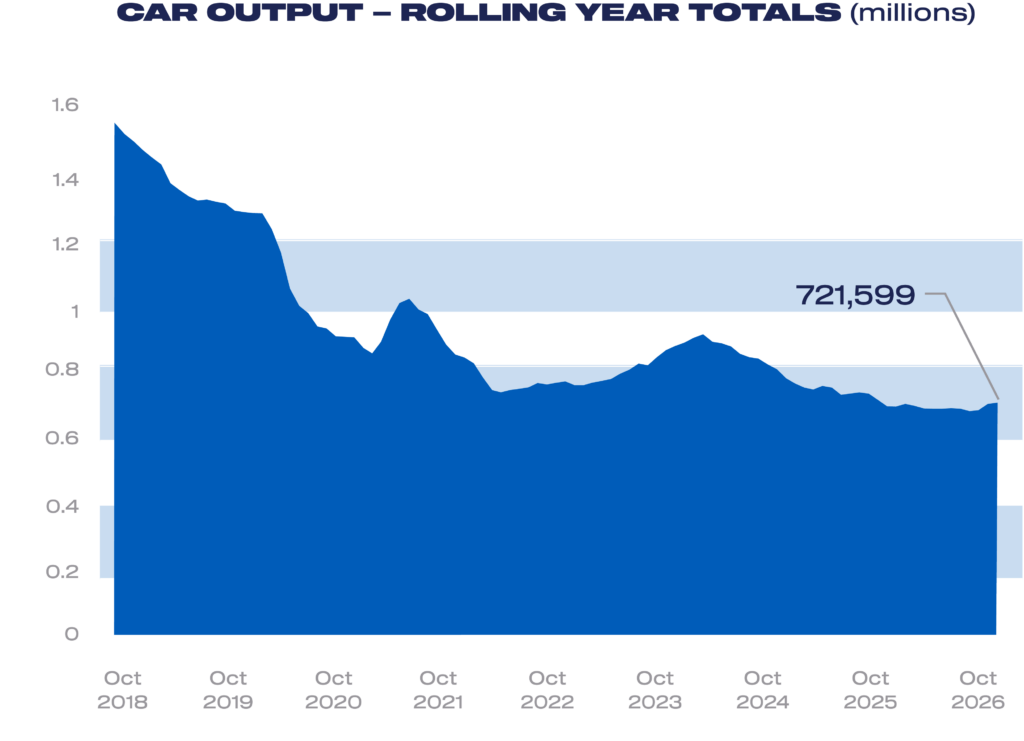
I'd be much more reassured by several quarters of growth alongside announcements of new vehicle programmes and investment in production lines. It is the decision to allocate the next generation of a car to a British factory that will determine how busy the factory is in five or ten years.
British-built cars depend on overseas buyers
One figure that particularly caught my attention was the proportion of cars heading overseas: 82.6% in October. Production for export grew by 14.2%, whereas cars made for the home market fell by 20.1%. The EU remained the largest destination for exports, accounting for 53.7% of shipments.
That is why trade negotiations matter to motorists even when the discussion feels far removed from a car showroom. Manufacturers need viable export markets to justify the scale of a factory. If the economics of producing here change, the next model could be allocated to a plant elsewhere. The effects on British suppliers would extend well beyond the factory gates.
The rather less encouraging story for vans
Commercial vehicle manufacturing fell 22.9% in October to 2,395 vehicles. Across the first ten months, production was 45% below the same period in 2025. As someone working in the vehicle leasing industry, I find this part of the announcement particularly sobering.
These are vehicles that support local businesses and public services. The decline also reflects changes in manufacturing capacity, so it should not be interpreted as a direct measure of how many vans British businesses are buying. Registrations and production are different statistics, and much of our domestic market is supplied by imports.
Can Britain build more cars in 2027?
The SMMT cites an independent outlook of 752,000 light vehicles in 2027 as new models enter production. That is a forecast, not a guarantee, and it covers cars and light vans rather than every commercial vehicle. I'd like to see it realised, but there are still questions about the cost of manufacturing here and access to overseas markets.
For drivers, a rise in production does not automatically translate into cheaper cars next month. Pricing depends on demand, stock levels, finance costs and the manufacturer's strategy. What a stronger manufacturing sector can do over time is help sustain investment, develop skills and provide more resilience in the supply of vehicles and components.
I want to see British factories producing cars that people around the world actually want to buy. The October figures are a welcome improvement, but I'll be watching the investment announcements and the longer-term production figures just as closely.
Source and graphics: SMMT, UK new vehicle manufacturing, October 2026, published 27 November 2026.