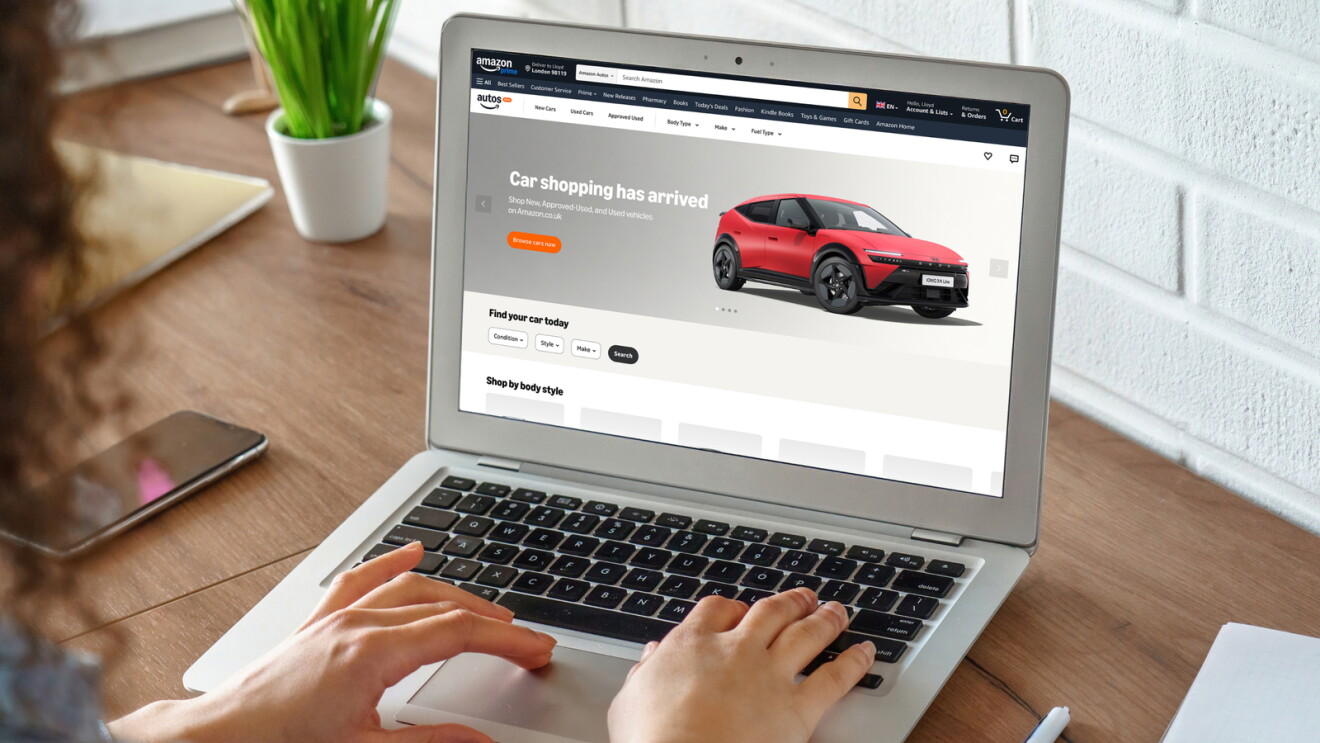
I rather like the idea of being able to browse for my next car while ordering coffee pods and a new phone charger on Amazon. Anything that makes buying a car less complicated gets my attention, especially having spent much of my career working in automotive retail, leasing and marketing. But when I read Amazon’s announcement this week, I found myself wondering what it might mean for the businesses that already help people find their next car.
Amazon Autos is due to launch in the UK in early 2027. I can see why customers will welcome it, and why some dealers will be keen to get involved. What interests me is whether, over time, the convenience of shopping through Amazon could come at the expense of choice elsewhere in the market.
How will Amazon Autos work in the UK?
Hyundai is the first manufacturer to sign up, with new and approved-used cars including the IONIQ 3, IONIQ 5, KONA and i20. Vertu Motors will also list used cars. More partners are expected before launch.
Customers will be able to search participating dealers’ stock, check prices, obtain an indicative part-exchange valuation, explore PCP and hire purchase finance and reserve a vehicle. The transaction will then be completed at the dealership. Amazon says retailers will continue to set their prices and manage their customer relationships.
It is an interesting model, particularly because it still gives the customer an opportunity to deal with someone in person. Amazon has already been operating its automotive marketplace in the US since December 2024, and according to its UK announcement, it now covers more than 150 American cities.
Buying a car should be easier than it is
Working in automotive marketing, I spend a lot of time thinking about what happens between someone landing on a website and actually getting the keys to a car. There is still plenty of room for improvement. Finding out whether a car is genuinely available, understanding what a finance quote includes and working out whether a particular offer is competitive can take far more effort than it ought to.
Why should somebody have to fill in an enquiry form simply to find out the price of a car? Equally, a monthly payment advertised without a clear explanation of the deposit, mileage allowance or final payment is of limited use to anyone trying to work out what they can afford.
Amazon understands how people shop online. If its arrival encourages automotive businesses to improve their websites, be more transparent about pricing and make stock easier to find, I think that will be a very welcome development. I would also expect some retailers to benefit from reaching people who would never otherwise have visited their websites.
What does Amazon Autos mean for smaller car dealers?
There is a distinction between having more cars available on one website and having more competition across the market. Imagine a small independent dealer with 40 cars in stock, a good local reputation and a knowledgeable team. It might have exactly the car you want at a better price than a national dealer group. If you start and finish your search on a marketplace that doesn't list that business, you may never know it exists.
Of course, Amazon could give smaller dealers access to an audience they could never afford to reach through their own advertising. That would be a genuinely positive outcome. Much will depend on the commercial terms, who can join, how vehicles are ranked and whether smaller businesses can compete for visibility without having the marketing budget of a national retailer. We don't yet know enough about those arrangements in the UK.
My concern is what happens if a marketplace becomes so popular that dealers feel they have little choice about being on it. A retailer might initially use Amazon to generate additional enquiries, only to find that more of the customers who once came directly to its website now arrive via a third party. Even if the dealer retains control of the sale, it may become increasingly reliant on somebody else for the introduction.
For anyone running an automotive business, that is worth thinking about now. There is real value in having customers who know your name, return to you and recommend you to friends. I wouldn't want to lose sight of that in pursuit of a few more leads this month.
Will you be able to lease a car through Amazon Autos?
As of 27 November 2026, Amazon has not announced personal or business contract hire for its UK launch. Its plans mention PCP and HP, both of which are different from leasing. With personal contract hire, you pay to use the vehicle for an agreed period and normally return it at the end. There is no contractual option to buy it in the usual PCH arrangement.
Given my work in vehicle leasing, I am particularly interested in whether Amazon will eventually move into this area. A consumer who simply wants a new family car for around £300 a month may be open to buying, financing or leasing it. If the website they start using only presents purchase and finance deals, a perfectly suitable lease could be missing from their comparison.
Were Amazon to introduce leasing in future, it would need to accommodate differences in initial rentals, annual mileage, contract length, maintenance and vehicle availability. Showing the lowest monthly payment without making those terms clear would do little to help a customer compare two offers fairly.
Independent leasing brokers can also bring together offers from different funders and suppliers, subject to the relationships they have. A good broker can explain why two apparently similar offers differ, or suggest an entirely different car that suits the customer's budget. There is an opportunity for Amazon to work with these businesses if it chooses to enter the sector, and I would much rather see that than a marketplace that limits the range of options consumers encounter.
There is still a place for people in automotive retail
I love researching cars online, but I also spend a lot of time driving them. A photograph and a specification sheet will tell you how large a boot is; they won't necessarily tell you how easily you can get a pushchair into it or whether you find the driving position comfortable. Sometimes a conversation with someone who knows the car well can save you hours of research.
That is particularly relevant when someone is considering their first electric car, trying to understand charging at home or deciding whether a plug-in hybrid would actually suit their journeys. It is quite possible to make the administrative side of buying a car much easier while still giving customers access to good advice when they need it.
For smaller dealers and brokers, I think the response should be to make their own online experience better and give people a reason to come back. Accurate stock, clear pricing, useful reviews and people who answer the phone and know what they're talking about all have a part to play.
Would I shop for a car on Amazon?
Yes, I would certainly have a look. I'm curious to see how well Amazon handles something as complicated as choosing and financing a car, and I hope it raises expectations of what a good automotive website should be.
I'd still compare the offers with those from independent dealers, manufacturer websites and leasing brokers before committing. A familiar checkout and a well-designed search page are useful, but they cannot tell me whether I've seen the best deal available across the market.
I'd love Amazon Autos to succeed in making car shopping simpler. I just hope that, in a few years' time, we have more worthwhile places to shop for a car, not fewer.
Disclosure: I work in the UK vehicle leasing industry. The views expressed here are my own. Image: Amazon.