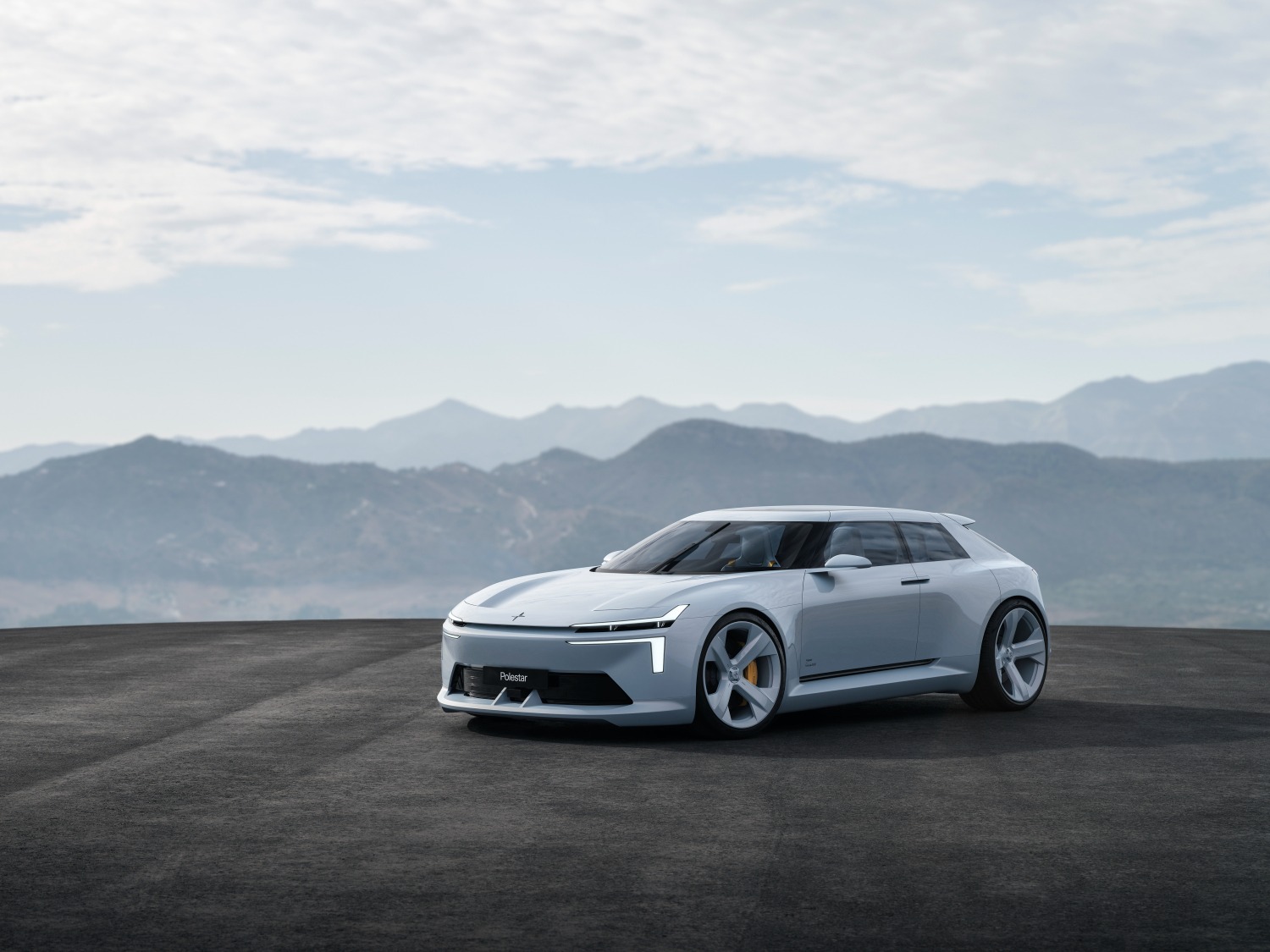
I have a bit of a soft spot for Polestar. Having spent time with the Polestar 2, 3 and 4, I've come to appreciate the way the brand does things. Its cars look different without being ridiculous, and there's usually a proper driver's car lurking underneath all that Scandinavian design.
Which is probably why I've spent rather longer than I should have looking at the pictures of its newly revealed Formula 2030 concept. Just look at it. I can't decide whether it's a hot hatch, a shooting brake or a slightly shrunken sports estate. Polestar calls it a practical four-door sports car, which is fair enough. Whatever the category, I think it looks fantastic.
There is a catch, of course. This isn't a new Polestar you can order. It's a design concept, unveiled on 10 November 2026, and Polestar has no announced plan to build it as it stands. But it's far from pointless, because quite a few of its ideas are already heading towards cars we really will be able to buy.
Can we please have more electric cars shaped like this?
The Formula 2030 is 4,680mm long and just 1,350mm tall. That makes it lower than the Polestar 5, with a long bonnet, broad rear shoulders and enormous 22-inch wheels. At over two metres wide, I suspect it would make some British parking spaces feel rather tight, but there's no denying the proportions work.
What really appeals to me is the shape. We've become so accustomed to electric SUVs and crossovers that seeing something low, purposeful and genuinely a little unusual feels refreshing. It has four seats and four doors, too, so there's at least a nod towards being useful in everyday life. Admittedly, those rear-hinged doors and that theatrical rear end look very much like concept-car territory.
I've recently driven the Polestar 4 Coupé and was impressed by its quality and the way it handled. I also understand why Polestar has now given it a more practical SUV sibling. The Formula 2030, though, pulls me in the opposite direction. It makes me want an electric car that sits close to the ground and looks as though its designer had an actual sports car in mind.
And the bit I'm most excited about? Eight buttons.
Yes, really. Polestar has filled the Formula 2030 with some clever technology, including a curved 20-inch driver display and a central touchscreen that physically changes position. Yet the detail that made me smile was the row of eight proper physical controls underneath it.
These aren't just decorative switches. The idea is that drivers can choose between different types of physical control, such as rotary dials and rocker switches, and assign their own frequently used functions. Want a real dial for something you adjust regularly? That's the thinking behind it.
It feels like a welcome admission that perhaps we went a bit too far with touchscreens. In my Polestar 4 review, I praised the driving position, build quality and chassis, but I also found that the screen controlled too much. I'm not against technology, far from it, but I'd rather adjust something simple without having to take my attention away from the road and hunt through menus.
There's a lovely irony in Polestar showing us such a futuristic car and having the most sensible idea inside it be a return to something we've had for decades. I really hope the company carries that thinking through to its production models.
A cabin that changes its mind about how you drive
The rest of the interior is pretty fascinating. There are three settings called Performance, Normal and Autonomous. Select Performance and the steering wheel and driver display move closer, while the central screen lowers into the console. Select Autonomous and the seating and steering arrangement opens out instead.
It sounds wonderfully theatrical, and I'd be interested to see whether it would genuinely improve the driving experience or simply become something to demonstrate to your friends. The seats also have inflatable cushions and bolsters that mould around their occupants, while the concept uses steer-by-wire and a concealed LiDAR sensor for its proposed autonomous-driving functions.
None of that is a promise that a 2027 Polestar will drive itself or rearrange its dashboard at the touch of a button. This is exactly what concepts are for: showing ideas, seeing how people respond and deciding what might be worth developing further.
There are some brilliant little details
The Formula 2030 wears a pale exterior colour called Nitrogen, which extends across the body, wheels and aerodynamic pieces. Polestar has broken it up with different finishes and flashes of Swedish Gold, including on the brake calipers and seatbelts. There's also a single upright windscreen wiper, a wraparound screen and a very unusual rear lighting design that does away with the full-width light bar we've come to expect.
Look a little closer and there's more going on beneath the styling. The seat backs use a composite made partly from European flax, structural components include low-emission steel, and the door materials have been designed with easier recycling in mind. There's even a transparent luggage floor with fitted bags underneath it. I can't imagine that last feature surviving the realities of family holidays and supermarket shopping, but it's certainly memorable.
Here's why the Formula 2030 actually matters
The important news isn't that Polestar has built a spectacular one-off. It's that the company says elements of this design are coming to the next-generation Polestar 2 in 2027 and the Polestar 7 compact SUV in 2028. The Formula 2030's distinctive Dual Blade headlight arrangement previews the next 2, while its new Single Blade rear lighting is intended to influence future production models.
And that's the part I'm especially interested in. The Polestar 2 was the car that brought the brand to the attention of many British drivers. I've driven the Long Range Dual Motor and can see why it developed such a following. A replacement needs to feel fresh without losing the rather individual character that made the original attractive.
We don't have a battery size, range figure, charging speed, power output or price for the Formula 2030. There isn't much point guessing those numbers for a car that isn't being launched. What we do have is a fairly clear idea of where Polestar's design team wants to go next, and I rather like it.
If Polestar is listening, I'd happily take the low roofline, the muscular shape and those proper buttons. The dramatic doors and see-through boot floor are negotiable. And if somebody could find a way to put something very close to this into production, I suspect I wouldn't be the only person interested.
Polestar Formula 2030: the questions worth answering
Is the Polestar Formula 2030 a production car?
No. It is a design concept unveiled in November 2026. Polestar has confirmed that some of its design features will influence future production models, but it hasn't announced plans to sell this particular car.
Does it preview the new Polestar 2?
Yes. Polestar says the Formula 2030's front-end design gives an indication of how the next-generation Polestar 2 will look. That car is planned for 2027.
What is the Formula 2030's range and price?
Neither has been announced. Polestar hasn't provided powertrain or battery specifications for the concept.
Source: Polestar's official Formula 2030 announcement and its Formula 2030 concept page. Image: Polestar.


