Chinese car manufacturers are no longer arriving in the UK with one token model and a hopeful business plan. They are becoming serious contenders, particularly in the family SUV market.
Two of the most interesting examples are the Geely Starray EM-i and the JAECOO 7 SHS-P. Both are generously equipped plug-in hybrid SUVs, both combine electric driving with the reassurance of a petrol engine, and both cost around £35,000 in the specifications most buyers are likely to want.
There is barely anything between them on price. The flagship Geely Starray EM-i Ultra costs £34,990, while the JAECOO 7 SHS-P Luxury starts at £35,170. That makes this an unusually straightforward comparison, but the similarities begin to disappear when you look at their batteries, electric ranges and overall personalities.
The JAECOO has already become one of the UK’s surprise success stories. It topped the UK new-car registration chart in March 2026, with the SHS-P accounting for the overwhelming majority of JAECOO 7 sales that month. Geely has more work to do when it comes to public awareness, but the Starray has a compelling specification that deserves serious attention.
I have not driven these two cars back-to-back, so this comparison is based on current UK pricing, official specifications, equipment and the findings of published road tests. Even so, there is already enough evidence to identify which car offers the stronger package for most buyers.
Geely Starray EM-i vs JAECOO 7 SHS-P at a glance
| Specification | Geely Starray EM-i Ultra | JAECOO 7 SHS-P Luxury |
|---|---|---|
| UK price | £34,990 | £35,170 |
| Battery capacity | 29.8kWh | 18.4kWh |
| Official electric range | Up to 84 miles | Up to 56 miles |
| Quoted combined range | Up to 618 miles | Up to 745 miles |
| 0-62mph | 8.0 seconds | 8.5 seconds |
| Central display | 15.4 inches | 14.8 inches |
| Vehicle warranty | 8 years or 125,000 miles | 7 years or 100,000 miles |
| Battery warranty | 8 years or 125,000 miles | 8 years or 100,000 miles |
| Towing capacity | More limited | Up to 1,500kg |
Prices and specifications are correct at the time of writing in July 2026. Manufacturer range figures are intended for comparison and will vary in real-world use.
Price and value
The Geely Starray EM-i range begins at £29,990 for the Pro, rising to £32,690 for the Max and £34,990 for the Ultra. The first two versions use an 18.4kWh battery and offer up to 51 miles of electric range, while the Ultra receives a much larger 29.8kWh battery and increases that figure to 84 miles.
The JAECOO 7 SHS-P Luxury costs £35,170. Unlike the Geely, there is not a cheaper plug-in hybrid trim beneath it, although buyers can now choose petrol and conventional hybrid versions of the JAECOO 7 if they do not need a plug.
That means the top Starray is £180 cheaper than the JAECOO while providing a considerably larger battery and another 28 miles of official electric range.
You could save £2,480 by choosing the Starray Max instead, but the Ultra is the version that gives the Geely its biggest advantage. Its 84-mile range changes how the car can be used. Rather than treating electric driving as something reserved for short commutes, many owners could complete several days of normal journeys before needing to recharge.
Price and value winner: Geely Starray EM-i
Electric range and charging
This is where the comparison begins to move decisively in Geely’s favour.
The JAECOO 7 SHS-P can officially travel up to 56 miles without using its petrol engine. That is still a useful figure and should cover the daily journeys of many UK drivers, provided the car is charged regularly.
The Starray Ultra, however, can cover up to 84 miles. That is 28 miles more than the JAECOO and represents a 50 per cent increase in official electric range.
An 84-mile figure gives the Starray a much better chance of operating like an electric car during the week. Someone travelling 15 miles each way to work could theoretically complete two full commuting days, with additional mileage available for local errands, before needing to plug in.
It is important to remember that neither car will achieve its official maximum in every situation. Motorway speeds, winter temperatures, heating, air conditioning and driving style will all reduce the distance available. Even allowing for those factors, the Geely begins with a considerable advantage.
Both cars also support DC rapid charging, something that still is not available on every plug-in hybrid. JAECOO quotes 20 minutes for a 30 to 80 per cent rapid charge. That could be useful on a longer journey, although public rapid charging will often cost considerably more than plugging in at home.
The larger Geely battery will take more electricity to replenish, but it also provides enough range to make charging away from home less frequent.
Electric range winner: Geely Starray EM-i
Petrol and combined range
The result changes when the battery runs low and a long journey lies ahead.
Geely quotes a combined range of up to 618 miles for the Starray Ultra, incorporating a fully charged battery and petrol tank. JAECOO claims up to 745 miles for the 7 SHS-P.
Those figures need to be treated with caution because real-world results will depend heavily on how the cars are driven and how frequently they are charged. Plug-in hybrid economy figures can look spectacular in laboratory testing, but they are only relevant when the driver actually plugs the car in.
For drivers who charge at home and mostly make shorter journeys, the Starray’s longer electric range is likely to be more valuable than the JAECOO’s greater total range.
For someone regularly travelling hundreds of miles, particularly without convenient access to charging, the JAECOO’s larger combined figure may be more appealing.
However, anyone who rarely intends to charge either car should consider whether a conventional or full hybrid would be the more sensible choice. Carrying a large battery without using it removes much of the financial and environmental benefit of buying a plug-in hybrid.
Combined range winner: JAECOO 7 SHS-P
Performance and hybrid systems
Both cars use a 1.5-litre petrol engine alongside an electric motor, but they are not performance SUVs.
The Starray produces a quoted combined output of 193kW and can accelerate from 0-62mph in 8.0 seconds. The JAECOO completes the same sprint in 8.5 seconds and has a top speed of 112mph.
Neither figure is particularly dramatic, but both should feel brisk enough for normal family use. Electric motors deliver their response immediately, so initial acceleration around town should feel stronger than the headline times suggest.
More important is how smoothly the petrol engine and electric motor work together. A good plug-in hybrid should not constantly remind its occupants which power source is being used.
Published comparisons have praised the Starray’s smooth hybrid operation and its polished interior technology. The JAECOO remains an impressive package, but some road tests have highlighted a less settled ride and occasional technology irritations.
The Geely appears to place a greater emphasis on relaxed, efficient progress. The JAECOO feels more like a traditional SUV that happens to contain a plug-in hybrid system.
Neither is likely to entertain a keen driver in the way a BMW X1 might, but that is probably missing the point. These cars are intended to make commuting, family trips and long-distance driving easy rather than exciting.
Performance and refinement winner: Geely Starray EM-i
Exterior design
Design is completely subjective, and this is one area where the JAECOO has a strong chance of winning buyers over.
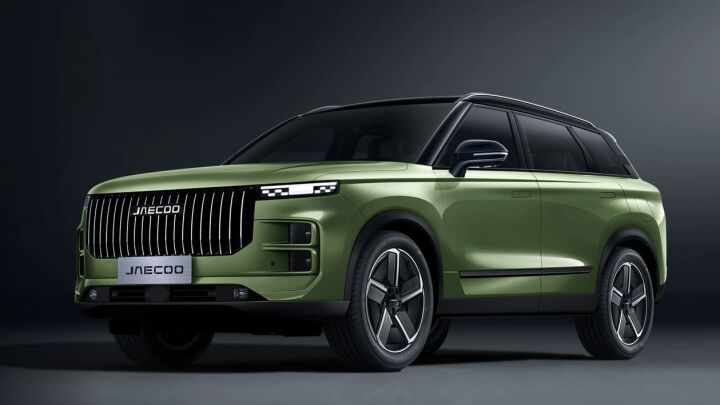
The JAECOO 7 is deliberately upright, square and imposing. Its prominent grille, high bonnet and sharp body lines give it the appearance of something considerably more expensive. There is more than a hint of Range Rover influence, which will either be part of the appeal or make it feel slightly derivative.
It certainly has presence. The JAECOO looks like a proper SUV rather than a raised family hatchback, and its success in the UK suggests that the design has resonated with buyers.
The Starray takes the opposite approach. Its front end is cleaner and smoother, with slim upper lights and the main headlamp units positioned lower in the bumper. The body is softer, more aerodynamic and less aggressive.
There are touches that could remind buyers of other Geely Group products, but it does not look like a copy of one particular premium SUV. It is smart and modern, although perhaps not as instantly recognisable as the JAECOO.
Personally, I think the Starray looks more sophisticated, but the JAECOO has considerably more visual theatre. Someone who wants their new car to make an immediate impression may find the JAECOO harder to resist.
Exterior design winner: JAECOO 7 SHS-P
Interior and technology
Both manufacturers use generous equipment levels to make established European alternatives look rather expensive.
Even the entry-level Starray Pro includes a 15.4-inch central touchscreen, online navigation, a 360-degree camera, wireless Apple CarPlay and Android Auto, keyless entry, privacy glass, heated electrically adjustable front seats and 19-inch alloy wheels.
The flagship Ultra builds on that specification while adding the larger battery and longer electric range.
The Starray’s cabin has a clean and contemporary appearance, with the large landscape screen dominating the dashboard. The graphics look sharp and the system has performed strongly in independent comparisons, although some commonly used functions are still buried within the display.
The JAECOO uses a 14.8-inch portrait screen and includes a head-up display, eight-speaker Sony audio system, air purification, heated steering wheel and heated front seats. Its interior is more dramatic, with a tall centre console and a layout designed to reinforce its rugged SUV character.
Both cabins rely heavily on their touchscreens. That looks impressive in a showroom but can become frustrating when trying to adjust settings while driving. Physical controls for frequently used functions remain valuable, regardless of how responsive a touchscreen might be.
The JAECOO creates a strong initial impression, but the Geely’s presentation feels calmer and more cohesive. It also appears to have the easier infotainment system to live with.
Interior and technology winner: Geely Starray EM-i
Passenger space and practicality
Both vehicles are five-seat family SUVs with enough room to serve as the main household car.
The Starray’s purpose-built electrified platform gives it a flat rear floor and plenty of storage throughout the cabin. Its luggage area also includes useful space beneath the boot floor, helping compensate for some of the packaging required by the hybrid system.
The JAECOO’s boxier body creates a light, upright cabin and a conveniently shaped load area. Its tall roofline should make it easy to install child seats or help younger passengers into the back.
Neither car offers seven seats. Buyers needing room for more than five people will need to look towards something larger, such as the Chery Tiggo 8 CSH or JAECOO 8 SHS-P.
The JAECOO has one major practical advantage: it can tow up to 1,500kg. That makes it the much more convincing option for buyers with a caravan, trailer or heavier leisure equipment.
For normal family use, there is little to separate them. For towing, the JAECOO is the clear choice.
Everyday practicality: Draw
Towing winner: JAECOO 7 SHS-P
Comfort and driving experience
Neither vehicle is marketed as a sports SUV, so comfort should take priority over sharp handling.
The Starray appears to deliver the more polished experience. Its hybrid system has been designed around smooth electric propulsion, while published testing has generally found it quiet, comfortable and easy-going.
The JAECOO provides a commanding driving position and feels substantial from behind the wheel, but its ride has received more mixed reviews. Large wheels, a relatively firm set-up and the weight of the plug-in hybrid system can make it feel less settled over poor surfaces.
Driver-assistance systems are another consideration. Both cars include an extensive collection of cameras, warnings and active safety functions. That sounds reassuring, but overly sensitive alerts can quickly become irritating.
This is an area that should be explored properly during a test drive. Try the adaptive cruise control, lane assistance and speed-limit warnings rather than only completing a short loop around the dealership.
Based on the available evidence, the Starray should be the more comfortable and refined everyday companion.
Comfort winner: Geely Starray EM-i
Warranty, servicing and dealer support
Geely provides an eight-year or 125,000-mile warranty for both the vehicle and high-voltage battery. That is one of the strongest standard warranty packages currently available in the UK.
JAECOO offers seven years or 100,000 miles of vehicle cover, alongside an eight-year or 100,000-mile high-voltage battery warranty. That remains excellent, but Geely provides an additional year and another 25,000 miles of potential protection on the car itself.
Geely has also published fixed hybrid servicing prices, with scheduled maintenance required every 10,000 miles or 12 months. The first four listed services currently cost £184, £340, £310 and £595 respectively, although these figures may change.
JAECOO has an advantage in the scale of its UK operation. By July 2026, the company said its retail network had grown to 144 locations. That should make finding a nearby dealership, servicing centre or demonstrator easier for many buyers.
A long warranty is valuable, but buyers should still check where their nearest authorised service centre is. Convenience matters when a car requires scheduled maintenance, warranty work or software attention.
Warranty winner: Geely Starray EM-i
Dealer network winner: JAECOO 7 SHS-P
Which car will cost less to run?
The answer depends less on the official fuel economy figures and more on whether the driver can charge at home.
Someone using a domestic electricity tariff and completing most journeys within the Starray’s electric range could use very little petrol during a normal week. Its 84-mile capability gives it a clear advantage for commuters and drivers covering frequent regional journeys.
The JAECOO can also complete many daily trips electrically, but its smaller battery means the petrol engine is likely to become involved sooner.
Public rapid charging changes the calculation. Electricity from a motorway charger can be significantly more expensive than charging at home and, in some situations, may cost as much per mile as using petrol. Rapid charging is therefore a useful convenience rather than the ideal everyday method of powering either vehicle.
Insurance, finance costs and depreciation should also be checked before ordering. Newer brands can sometimes offer very attractive purchase prices but carry higher insurance premiums or less predictable future values.
A low list price does not automatically guarantee the lowest overall ownership cost.
Choose the Geely Starray EM-i if…
Choose the Starray if you can charge regularly and want to complete as many journeys as possible without using petrol.
It is also the better choice if you value:
- An 84-mile official electric range
- A larger 29.8kWh battery
- A slightly lower purchase price
- A cleaner, more understated design
- A polished and spacious interior
- An eight-year or 125,000-mile vehicle warranty
- Smooth, relaxed everyday driving
Choose the JAECOO 7 SHS-P if…
Choose the JAECOO if you want an SUV with greater visual presence and a more established UK ownership network.
It is likely to suit you better if you value:
- Bold and rugged SUV styling
- A quoted combined range of up to 745 miles
- A 1,500kg towing capacity
- A commanding driving position
- A feature-packed interior
- Easier access to a large UK dealer network
- A car that has already proved popular with British buyers
Geely Starray EM-i vs JAECOO 7 SHS-P verdict
The JAECOO 7 SHS-P is not difficult to understand. It looks expensive, comes packed with equipment and offers enough electric range to make daily plug-in hybrid ownership worthwhile. Its success in Britain is not simply the result of low prices or clever marketing. It gives buyers the presence of a premium SUV without the traditional premium price.
It also has clear advantages for towing and long-distance combined range. Add its rapidly expanding dealer network and the JAECOO remains a convincing purchase.
However, the Geely Starray EM-i Ultra is the better overall plug-in hybrid.
For £180 less, it provides a substantially larger battery, another 28 miles of official electric range, slightly stronger performance and a longer vehicle warranty. Its interior appears more cohesive, its hybrid system more polished and its 84-mile range makes it possible to use the car as an EV far more frequently.
That last point is what ultimately decides this comparison. The purpose of paying extra for a plug-in hybrid is to drive on electricity as much as possible while retaining a petrol engine for longer journeys. The Starray is simply better equipped to do that.
The JAECOO may be the one that initially grabs your attention, but the Geely is the car that makes the stronger long-term argument.
Overall winner: Geely Starray EM-i Ultra